
EU Machinery Regulation
The Factory That Became a Manufacturer
An engineering retrofit can turn a factory operator into a machinery manufacturer. What Article 18 means for plant modifications, integrators and conformity.
Every newsletter, one browsable body of work.
EU Machinery Regulation
An engineering retrofit can turn a factory operator into a machinery manufacturer. What Article 18 means for plant modifications, integrators and conformity.

Product Safety Intelligence
Q3 2026 brought new evidence from European market surveillance, the start of CRA reporting obligations and important ENISA guidance. This Review connects the developments to product governance, lifecycle control and practical executive action.

PHP2Shell
A critical PHP vulnerability raises a bigger question: can businesses, governments and institutions substantiate the security assurances they give?

Industry Spotlight
Why cyber end-of-support creates a different lifecycle problem for safety-related control systems.
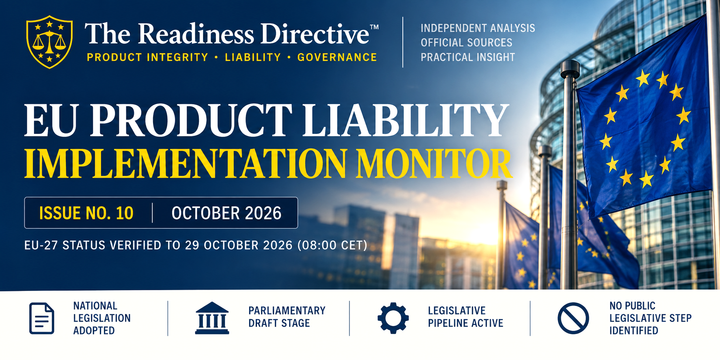
EU PLD Implementation Monitor
October is the most consequential month yet in EU-27 implementation of Directive (EU) 2024/2853. The position is now 4 adopted/notified, 8 parliamentary/draft, 11 pipeline active and 4 with no public legislative step identified.
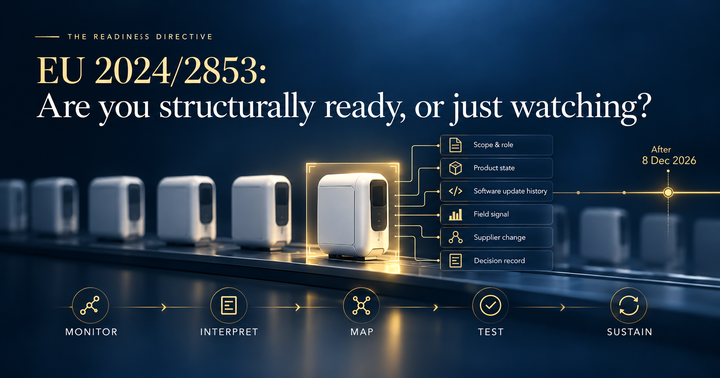
EU Product Liability Directive
From 9 December 2026, products placed on the EU market, including products from lines already in production, enter the new liability regime. Tracking transposition will not tell you whether you could reconstruct their history.

Product Liability
The revised Product Liability Directive applies to products placed on the market after 8 December 2026. The most useful test now is whether you can reconstruct one of them.

Product Liability
England & Wales is reconsidering product liability for the digital age. The legal route differs from the EU PLD, but evidence, software and lifecycle control are creating increasingly familiar questions.

EU Product Liability Directive
The EU Product Liability Directive cuts across functions. The challenge before December is not rewriting policies - it is making decision rights work across the organisation.
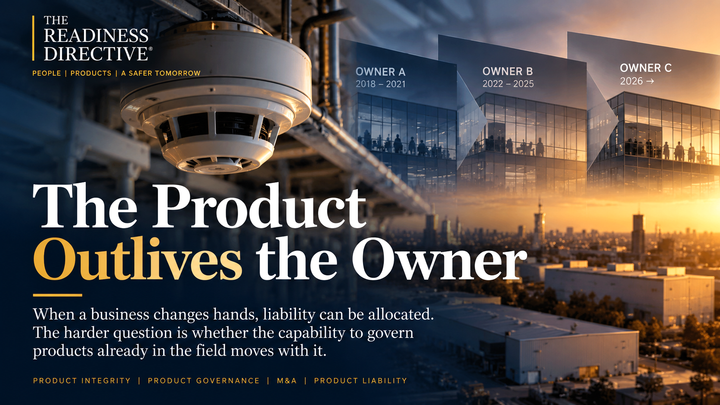
Product Integrity
When a business changes hands, liability can be allocated. The harder question is whether the capability to govern products already in the field moves with it.

Cyber Resilience Act
CRA Article 14 defines the reporting clock. But another interval matters first: how long does it take an organisation to recognise that an ordinary operational signal may have become a regulatory question?

Product Integrity
A hospital fire reveals how individually governed systems can create combined safety conditions. What Turku teaches us about Product Integrity, evidence, system interaction and the revised EU Product Liability Directive.
Product Safety
A legacy recall still in service, certified safety footwear failing market checks, and a new cyber reporting clock all expose the same weakness: controls must continue to work.
EU PLD Implementation Monitor
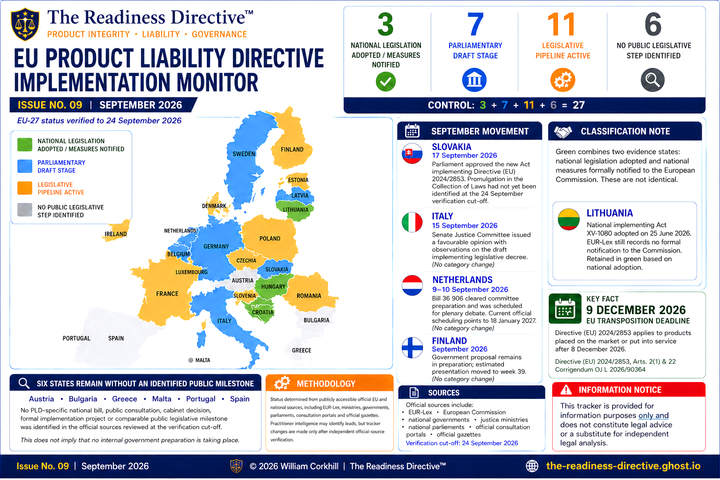
EU-27 implementation of Directive (EU) 2024/2853 is moving further into formal legislative machinery. September status: 3 adopted/notified, 7 parliamentary/draft, 11 pipeline active, and 6 with no public legislative step identified.
Cyber Resilience Act
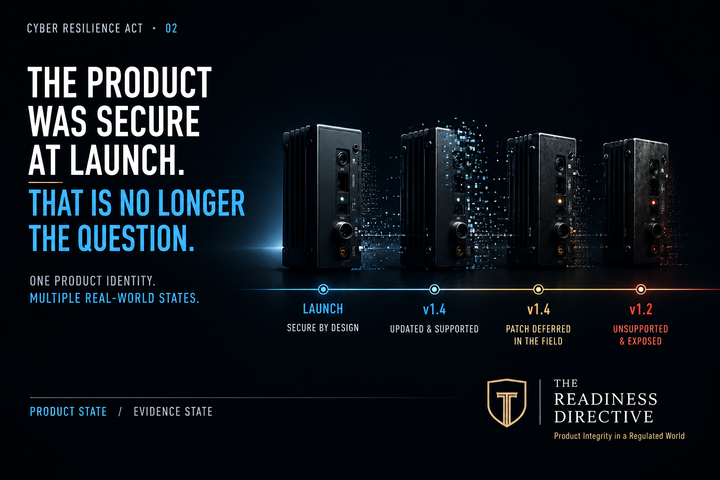
Connected products do not remain in one cybersecurity state. Updates, dependencies, support conditions and installed-base divergence mean assurance must be governed throughout the lifecycle

Product Safety
Products now move globally with extraordinary ease. Consumer protection does not. This article examines what that gap means for families, governments, businesses and the people quietly working to make product safety real.
Cyber Resilience Act
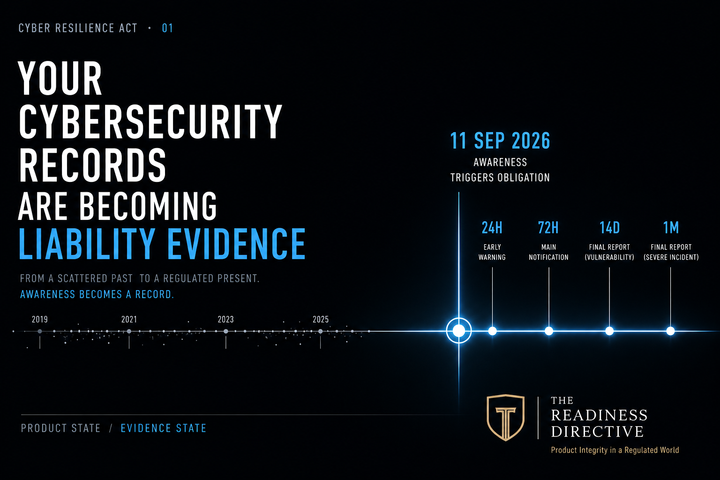
From 11 September 2026, the Cyber Resilience Act begins creating a timed regulatory record of what manufacturers know about actively exploited vulnerabilities and severe security incidents. That evidence may later matter far beyond cybersecurity compliance.
The Visibility Gap
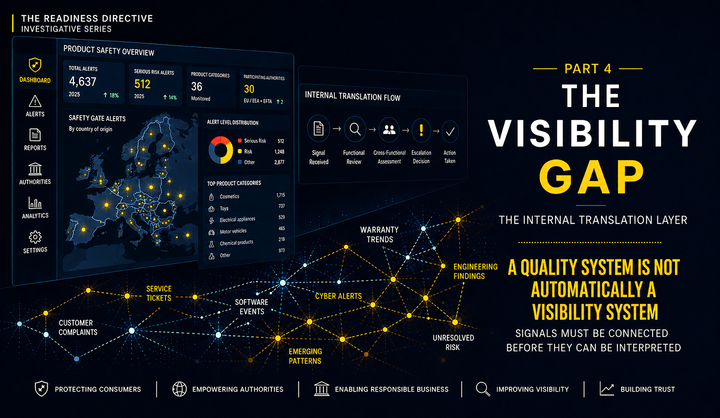
The internal translation layer: where product safety signals become organisational decisions
EU Product Liability Directive
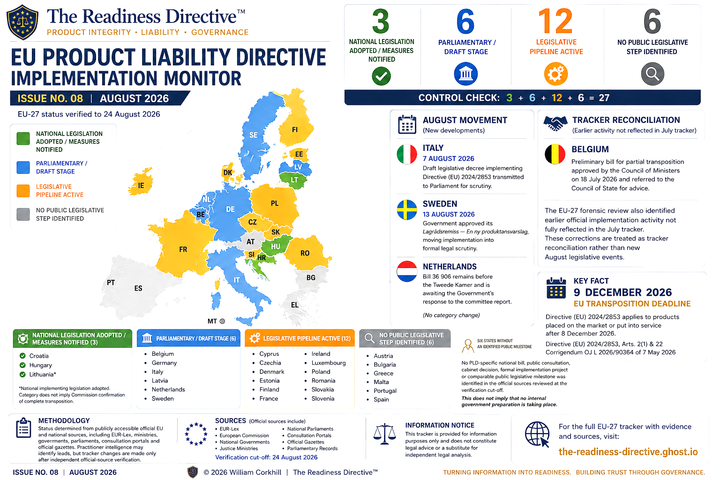
EU-27 implementation of Directive (EU) 2024/2853 is moving into formal legislative machinery. August status: 3 adopted/notified, 6 parliamentary, 12 pipeline, and 6 with no public legislative step identified.
The Visibility Gap
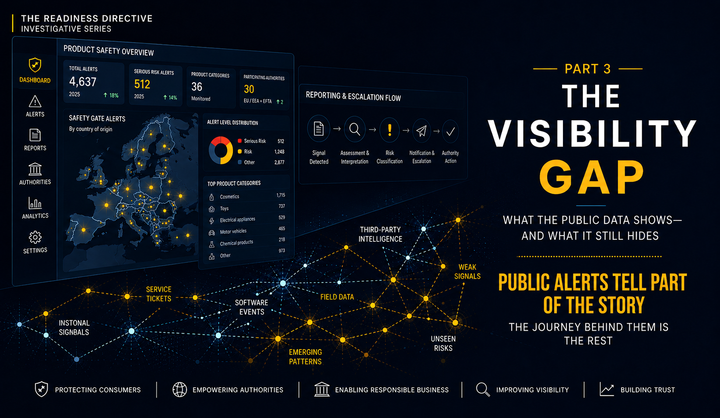
Public product safety data reveals formal action, but not every weak signal, unresolved investigation or hidden risk that preceded it.
The Visibility Gap
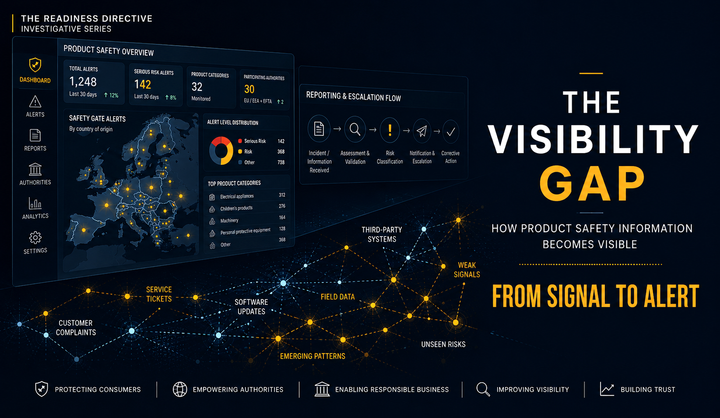
Before a public alert appears, organisations must detect, interpret, escalate and classify emerging product safety signals. This article examines how that journey works across the EU, Great Britain and Northern Ireland.

Product Integrity
A data centre can have world-class redundancy and still lack a complete account of what actually existed when something went wrong.
The Visibility Gap
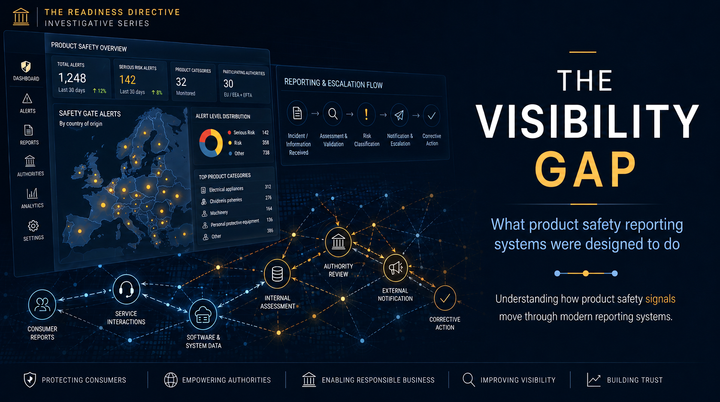
Product safety systems were built to detect danger early. The harder question now is whether they can still see clearly enough.
The Readiness Directive
Insurance can absorb part of the financial impact of a product-liability event. It cannot establish facts, coordinate the first response, preserve evidence or create command when a serious product issue emerges.
EU Product Liability Directive
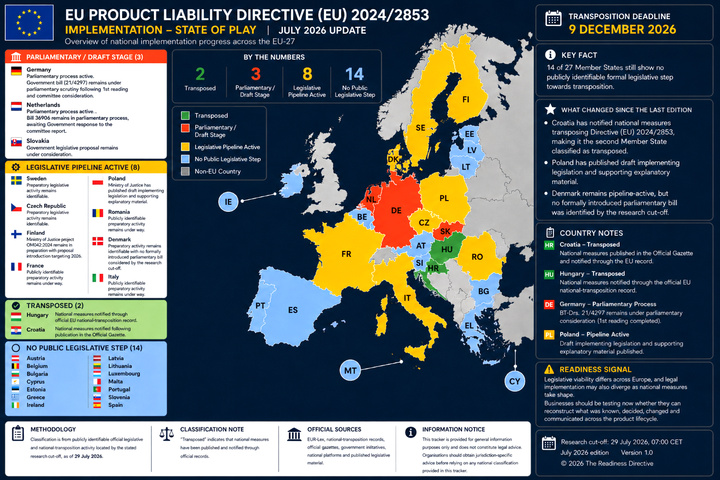
the approved Croatia/14 Member States summary

CEO and Board
Executive confidence is not enough. Under the new EU product-liability regime, organisations must be able to reconstruct what they knew, what they decided and why.
Signal Translation
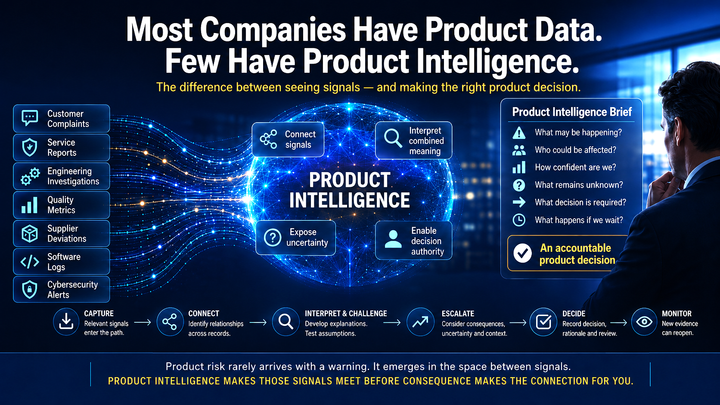
Turning product and regulatory signals into something a board can act on, before harm, claim or regulator arrives.
PLD by Market
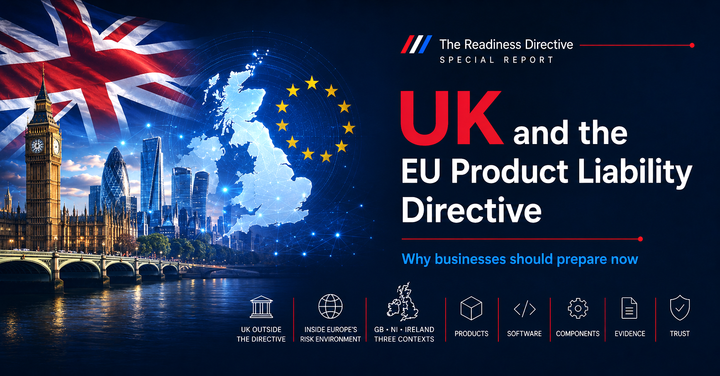
For UK manufacturers, proximity to the EU is not protection. This edition reads the gap under the Product Liability Directive.

PLD by Market
Readiness under the EU Product Liability Directive as a trust advantage for Indian manufacturers and exporters.
PLD by Market
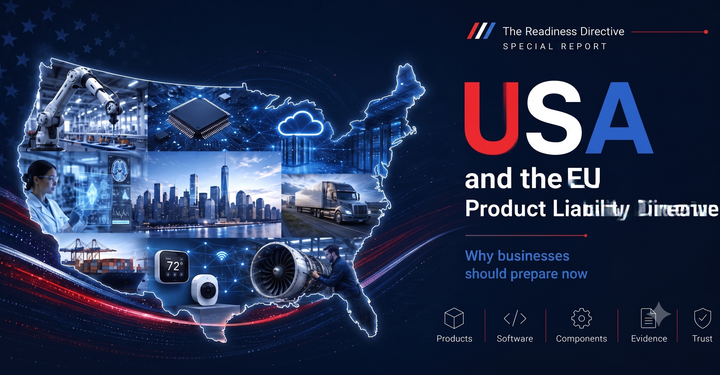
US product-liability maturity does not equal EU readiness. Reading the gap for manufacturers and importers.
No dispatches match this view. Browse all dispatches.